quinta-feira, 27 de junho de 2013

Lego Movie!

Here's the first trailer for the LEGO Movie, which is directed by Cloudy With a Chance of Meatballs and 21 Jump Street's Phil Lord and Chris Miller.
Chris Pratt leads the voice cast as Emmet. Oscar winner Morgan Freeman and Elizabeth Banks will star as two of Emmet's fellow travelers: Vitruvius, an old mystic; and tough-as-nails Lucy, who mistakes Emmet for the savior of the world and guides him on his quest. She also calls upon the mysterious Batman, a LEGO minifigure voiced by Will Arnett, with whom she shares a history.

See this trailer here:

Comment!

segunda-feira, 24 de junho de 2013

Predictions to NBIC technologies

Predictions

2015

•    Anywhere in the world, an individual will have instantaneous access to needed information, whether practical or scientific in nature, in a form tailored for most effective use by the particular individual.
•    New organizational structures and management principles based on fast, reliable communication of needed information will vastly increase the effectiveness of administrators in business, education, and government.
•    Comfortable, wearable sensors and computers will enhance every person’s awareness of his or her health condition, environment, chemical pollutants, potential hazards, and information of interest about local businesses, natural resources, and the like.

2020


•    People from all backgrounds and of all ranges of ability will learn valuable new knowledge and skills more reliably and quickly, whether in school, on the job, or at home.
•    Individuals and teams will be able to communicate and cooperate profitably across traditional barriers of culture, language, distance, and professional specialization, thus greatly increasing the effectiveness of groups, organizations, and multinational partnerships. 
•    National security will be greatly strengthened by lightweight, information-rich war-fighting systems, capable uninhabited combat vehicles, adaptable smart materials, invulnerable data networks, superior intelligence gathering systems, and effective measures against biological, chemical, radiological, and nuclear attacks. 
•    Engineers, artists, architects, and designers will experience tremendously expanded creative abilities, both with a variety of new tools and through improved understanding of the wellsprings of human creativity.
•    Average persons, as well as policymakers, will have a vastly improved awareness of the cognitive, social, and biological forces operating their lives, enabling far better adjustment, creativity, and daily decision-making. 
•    Factories of tomorrow will be organized around converging technologies and increased human-machine capabilities as intelligent environments that achieve the maximum benefits of both mass production and custom design.
•    Agriculture and the food industry will greatly increase yields and reduce spoilage through networks of cheap, smart sensors that constantly monitor the condition and needs of plants, animals, and farm products.
•    The work of scientists will be revolutionized by the importation of approaches pioneered in other sciences, for example, genetic research employing principles from natural language processing and cultural research employing principles from genetics.

2025


•    Robots and software agents will be far more useful for human beings, because they will operate on principles compatible with human goals, awareness, and personality. 
•    The human body will be more durable, healthier, more energetic, easier to repair, and more resistant to many kinds of stress, biological threats, and aging processes. 
•    A combination of technologies and treatments will compensate for many physical and mental disabilities and will eradicate altogether some handicaps that have plagued the lives of millions of people.

2030


•    Fast, broadband interfaces between the human brain and machines will transform work in factories, control automobiles, ensure military superiority, and enable new sports, art forms and modes of interaction between people.
•    Machines and structures of all kinds, from homes to aircraft, will be constructed of materials that have exactly the desired properties, including the ability to adapt to changing situations, and increase energy efficiency and environmental friendliness.
•    The ability to control the genetics of humans, animals, and agricultural plants will greatly benefit human welfare; widespread consensus about ethical, legal, and moral issues will be built in the process.
•    Transportation will be safe, cheap, and fast, due to ubiquitous real-time information systems, extremely high-efficiency vehicle designs, and the use of synthetic materials and machines fabricated from the nanoscale for optimum performance.
•    Formal education will be transformed by a unified but diverse curriculum based on a comprehensive, hierarchical intellectual paradigm for understanding the architecture of the physical world from the nanoscale through the cosmic scale.

2050


•    The vast promise of outer space will finally be realized by means of efficient launch vehicles, robotic construction of extraterrestrial bases, and profitable exploitation of the resources of the Moon, Mars, or near-Earth asteroids.

Comment!

Brazil, Fortune and Fate Turn on Billionaire

When the Brazilian billionaire Eike Batista appeared on the Charlie Rose show in 2010, he and his country were on a roll.


Brazil’s economy, driven by a worldwide commodity boom, grew a blistering 7.5 percent that year. And Mr. Batista’s prodigious holdings — spanning oil, mining, shipping and real estate — were soaring in value. In the interview, Mr. Batista was asked how rich he would become over the next decade.
“A hundred billion dollars,” he said, an amount that would most likely have made him the wealthiest person in the world.
Today, with the Brazilian stock market and the value of its currency falling as mass demonstrations hobble the country, Mr. Batista’s billions are evaporating. From a peak of $34.5 billion in March 2012, his wealth has dropped to an estimated $4.8 billion, according to the Bloomberg Billionaires Index. His lenders are growing anxious, and there are concerns that he might have to reorganize — and possibly lose control of — his dwindling empire.
The rise and fall of the charismatic industrialist mirrors Brazil’s sudden reversal of fortune. After years of economic expansion, the South American nation has begun to sputter. Inflation has become a major concern. Brazil’s stock market index has declined about 23 percent this year, the most of any large country. This month, Standard & Poor’s cut its outlook on Brazil’s credit rating to negative, citing slowing growth and weakening finances.
And then there are the street protests spreading across Brazil, stunning the country’s political and business establishment. With outbursts of violence, the protests, initially caused by an increase in bus fares, have grown into a broad questioning of the government’s priorities. The protests shook an array of cities over the weekend, with somewhat less intensity than in previous days, and organizers promised a new round of demonstrations in the days ahead.
Mr. Batista’s conglomerate, as an emblem of the nation’s industrial mettle, ranked among the government priorities now being questioned, receiving more than $4 billion in loans and investments from the national development bank. While protesters have not focused much ire on Brazil’s economic elite, there has been a building resentment toward the fact that governing structures subject to corruption in Brazil remained largely the same throughout the long economic boom, as authorities channeled huge resources of the state to projects controlled by tycoons.
The protesters have directed much of their anger toward political leaders, some of whom are close to Mr. Batista, like the governor of Rio de Janeiro, Sérgio Cabral, to whom Mr. Batista occasionally lent his private jet and who found demonstrators camped in front his home.
“Eike Batista assembled an empire thanks to colossal financing from the Brazilian government,” said Carlos Lessa, an economist and former president of Brazil’s national development bank. “But his explosion of wealth and prominence on the global stage came with risks, as the government itself and investors are discovering now.”
Mr. Batista built his fortune by selling investors on the potential of Brazil, forming companies that would benefit from the country’s rich oil fields, vast mining resources and fast-growing middle class.
But over the last year, investors in Mr. Batista’s six publicly traded businesses — none of which are profitable — have unloaded their shares amid disappointing projections, missed deadlines and a heavy debt load.
“He bundled wind and sold it,” said Miriam Leitão, an economic historian and columnist for O Globo, a leading Brazilian newspaper. “The euphoria fooled a lot of people.”
Now Mr. Batista is shedding assets and raising cash. In April, he dumped a large stake in his electric power company. He has put a private jet, a $26 million Embraer Legacy 600, up for sale. He is seeking a partner for Rio de Janeiro’s landmark Hotel Glória that he bought in 2008, a project that was supposed to be ready for the 2014 soccer World Cup but is mired in delays.
On Sunday, the newspaper Folha de São Paulo reported that Mr. Batista’s offshore construction company, OSX, had defaulted on a payment of more than $200 million to Acciona, a Spanish construction company. A spokeswoman for Mr. Batista disputed the report, contending that OSX has been in negotiations with Acciona over “obligations.”
In a statement, Mr. Batista rejected speculation that his business empire could be heading toward a collapse. Referring to his recent sale of stock in his own flagship oil company, OGX, Mr. Batista called the move a “minimal timely adjustment” related to the “reduction of the cost of debt among creditors.” While the move eroded confidence by investors, he emphasized that he had no plans to do so again.
There was a time when Mr. Batista personified Brazil’s emergence as a world economic force. The son of a former president of the Brazilian mining giant Vale, Mr. Batista was born to privilege. He earned his first millions buying gold from remote mines in the Amazon and then acquiring gold mines in Brazil and Canada.
Since the middle of last decade, Mr. Batista, through his EBX Group holding company, has formed six listed businesses: OGX (oil) and OSX (offshore equipment and services to energy companies), as well as MMX (mining), LLX (logistics), CCX (coal) and MPX (power). The X in each company name is meant to symbolize the multiplication of wealth.
Mr. Batista, 56, lives large and relishes the spotlight. He is a onetime champion speedboat racer, and his former wife was a Playboy cover girl. In Jardim Botânico, an upscale district of Rio, he opened a lavish Chinese restaurant, called Mr. Lam, where he entertained business visitors from the Far East. For a time, he parked his Mercedes-Benz SLR McLaren, which sells for about $450,000, in his living room. He had a memoir published in 2011 with the title “The X Factor: The Path of Brazil’s Greatest Entrepreneur.”
That book now looks in need of an afterword. Consider the ups and downs of OGX, the oil company and once one of Mr. Batista’s biggest holdings. In 2008, OGX raised $4.1 billion in the Brazilian stock market in what was then the country’s largest-ever I.P.O. But last June, after OGX missed its production forecasts by a wide margin, its shares tanked, and have fallen about 90 percent. On Friday, three of its five independent board members, including a former Brazil finance minister and a former Supreme Court justice, were reported to have resigned.
Skepticism is building beyond the ranks of his own corporate boards. “For both him and Brazil it’s time to talk less and deliver more,” Exame, the nation’s top business magazine, recently said in an overview of the woes at his companies.
There is also the decline last week in the stock of CCX, his coal business. Shares dropped 37 percent on Thursday to a record low after Mr. Batista canceled plans to take the business private. Mr. Batista said in a statement that the tumult in Brazil’s stock market “doesn’t represent an ideal environment to sustain the current terms” of the deal.
If Mr. Batista’s holdings continue to diminish in value, analysts say that his lenders, which include some of Brazil’s biggest banks, could push him into a restructuring that could cost him control of his companies.
The crisis at his empire is unfolding as Brazil is grappling with a decline in prices for some of the commodities the country exports, and ambitious infrastructure projects across the country face delays. While growth slowed to less than 1 percent in 2012, Brazil’s economy is not in crisis. Economists still expect the economy to grow about 2.5 percent this year, even as market turbulence shakes Brazil and other developing countries.
The sudden emergence of protests in more a hundred cities is putting greater pressure on authorities to lift the economy from its slowdown.
Aside from his business woes, Mr. Batista has also come under scrutiny because of his family. In March 2012, his son, Thor Batista, was driving his father’s McLaren when he struck a bicyclist and killed him instantly. This month, a Brazilian jury convicted Mr. Batista, 21, of vehicular manslaughter. He avoided prison, but was banned from driving for two years and fined about $500,000. His lawyers said they would appeal.
Mr. Batista has maintained a brave face through the losses, reminding investors that his companies still have billions of dollars of available cash. He has also taken to social media to fight back, telling his 1.3 million Twitter followers that anyone who bet against him would be “caught with their pants down.”
Jack Deino, a fund manager at Invesco, appears willing to take that risk. After acquiring a big position in the bonds of the oil concern OGX, he sold his entire stake a year ago after the company announced the major production shortfall.
“Batista built his businesses with a whole lot of salesmanship and hype,” Mr. Deino said. “I feel like I’ve been burned and won’t be touching any more of his ventures.”

terça-feira, 4 de junho de 2013

SimCity 5: 10 Tips on How to Become the Best Mayor


SimCity is the first major instalment in the SimCity series after SimCity 4 and is packed with many cosmetic changes in the game such as up-to-date 3D graphics, GlassBox Engine, and Google Maps-like interface. Due to the world changes of SimCity, being a mayor could be tough and challenging, and to help out, here are the ten tips to become the best mayor.


1. Zoning
Explore the game interface and the right zone for your residential, commercialand industrial infrastructures. Take note of the wind direction to keep away pollution of industrial zone away from the residential area. Put your commercial zone where sims usually drive or pass by otherwise, income will be a problem, a common example is set the commercial zone in the between industrial and residential.


2. Resources
There are some underground resources you can find in your city such as water, coal, ore, and oil. Click the "All Data Maps" on the bottom right of the screen to determine how many underground resources you have.

3. Water and Sanitation
Building a Water Tower will supply the water needs of your city but drains the underground supply of water. Naturally, the underground supply will replenish on its own during rain. Never build the Sewage Outflow Pipe near a Water Tower or it can contaminate the water supply to the city which eventually create a disease outbreak and death.


4. Leave Spaces for Structural Expansion
Most building can expand using their own space such as town halls, clinics, and schools. These building will require bigger lot space as soon as they are upgrade and even expand sideways making rooms for related structures in accordance to its expansion.


5. Solve the Traffic Issues
Traffic can also occur in SimCity but easily fixed unlike in the world. Add Mass Transportation system to relief the congestion. Be careful on overdoing mass transits such as bus stops, too much of it can induce traffic and lower its efficiency than solving the real problem. Another solution is to upgrade roads to solve traffic issues; remember that traffic can ruin tourism and city income.


6. Parks and Trees
If you want to attract wealthy sims to move in to your city, place parks and trees to make their stay comfortable. Parks and plazas are good for sims and it uplifts their everything living which will attract wealthy sims. Planting trees around your city can lessen pollution and making sims stay.


7. High Technology Industry
High Technology industry requires a city to have a good foundation on its sims. The education system must the main focus to make sims learn skill requirements for such technological tier. Build a grade school, high school, universities and libraries to give sims the education needed for high technology.


8. City Expansion
Once your city is crowded and full of whatever you have put in it, it is time to expand your territory by obtaining a new land. Start building the new land with same aspect used from your first city. You can use the city hall to make several cities trade, communicate and use services.


9. Emergency Buildings
Do not forget to establish structures providing security and emergency services. Build police stations, fire stations, and hospitals to help the city fight against crime, diseaseand fire. Just like any other structures, these emergency structures are affected by traffic. If your city has heavy road congestion, ambulance, police cars, and fire trucks won't arrive quickly to the location they were dispatched.


10. Upgrade Instead of Branching Out
Use upgrades of building to expand their income and services rather than spreading several branches especially if not necessary. Not only they are useless in the long run, but will cause lot spaces to be crowded, taking areas for better buildings instead.


Comment!

How $96,000 can buy you a top 10 ranking in the U.S. app store


Can you buy your way to the top of the app store? In a word, yes.

Apple may have killed AppGratis for being too good at driving installs, but the “boost effect” of big marketing campaigns, in-app promotions in popular apps, and other somewhat less savory means of driving big download numbers is still very much alive and kicking.

To get top 10 in the U.S., you need 80,000 downloads, mostly in the previous 24 hours. Once you’re there, of course, Apple’s own “app discovery” effect kicks in as users see you featured on the front page of the app store … and you tend to stay there.

Mobile app marketing company TradeMob — the largest app marketing platform in the world — says it works with 80 different app discovery partners. Most of them say that AppGratis just became too big for its britches (or Apple’s) and was culled simply for that reason. And most of them are still providing free or discounted apps, with 60 percent of them feeling “perfectly safe” that their app will not be deleted.

So based on 72 “boost” campaigns, TradeMob calculated the number of downloads required to hit the top 10 lists for some of the key iPhone markets … and the cost required to make that happen.

It turns out that those 80,000 downloads cost you $96,000 in the U.S. for a non-game app — an average price of $1.20 per download. That’s actually cheaper than it would be if you had to buy them all, due to “organic uplift” that helps you generate more downloads as people start using your app, and tweeting, sharing, and talking about your app.

It’s cheaper for games.

While non-game apps have a 65 percent uplift, game apps get a full 100 percent organic boost, according to TradeMob. That means that for every game app you pay, incentivize, or advertise to get a download, another one happens “for free.” So those 80,000 installs cost you only an average price of $0.70, for a total of $56,000.

Other countries are cheaper, of course.
The UK requires only 26,000 installs to hit the top charts; Germany, 15,000, and Spain, a mere 7,000. But, of course, the financial benefits of having a top 10 app in those countries is significantly less as well.

Here’s all the data, in visual form:


Comment!


segunda-feira, 3 de junho de 2013


Hi, guys, it's all right? Well, today I will give some more tips smart and interesting. I am university student of medicine, and so I have to study a lot and always need a reinforcement! 

I also already studied engineering, then know what Calculus can do with our lives!

I found something that helped me in this amazing hard study routine: A course in video on optimization of the study and how to concentrate deeply on the books! I want to be a great doctor, so I stress the most, and if you is student should also give your best! Click here and take a look at Scott Hyoung page and then tell me how are going, ok? 

Comment!

Why He Doesn't Want to Eat Octopus


This is Luiz Antonio, he lives in Brazil and probably be the youngest animal advocate! And you know what? he is right! Animals are good guys and should be maintained!

Comment!

The country music of the moment ... Cruise!

Comment !

Pigs fed marijuana produce tastier bacon


You know the routine of a farmer creates pigs? No matter what your level of understanding of the subject, you may find it strange to know of the existence of a U.S. farmer feeding her pigs with marijuana. Yes, marijuana.

According to the owner of the BB Ranch Meat butcher, William Von Schneidau, the idea was to create a product that is now known as "pork-pot" and, therefore, he made a partnership with a manufacturer's plant, the Top Shelf Organic , a company specializing in the cultivation and sale of the drug for medicinal purposes, since this practice is legal in the land of Uncle Sam.

The piggies saw then bacon with a touch of cannabis. According to the producer, meat supercalórica is now even tastier and red too. Schneidau explained that even with the difference in the meat produced, the bacon does not cause behavioral changes such as those caused by the drug, since he himself experienced and felt no difference. So, what do you think of this idea?


Comment!

In two weeks, Mars One receives over 78,000 applications for one-way trip to Mars


Despite the one-way nature of the trip, it seems there’s no shortage of people willing to pack their bags and experience life on Mars. Just two weeks after putting out the call for potential Mars settlers, Mars One had received over 78,000 applications from people in over 120 countries. With the application period set to last 19 weeks, the Mars One selection committees face a daunting task in whittling the numbers down to the four individuals that will ultimately make the journey that is planned for September 2022.


The USA was far and away the source of the greatest number of applicants with 17,324 willing to leave the land of the free behind for a taste of the Red Planet. It was followed by China with 10,241 and the UK a distant third with 3,581. Russia, Mexico, Brazil, Canada, Colombia, Argentina and India rounded out the top 10.

“Mars One is a mission representing all humanity and its true spirit will be justified only if people from the entire world are represented. I’m proud that this is exactly what we see happening,” said Mars One Co-Founder and CEO, Bas Lansdorp.


The online application process will continue until August 31st 2013, when Mars One hopes to have attracted half a million applicants, who are all required to submit a one-minute video explaining their reasons for wanting to go to Mars. Applicants can choose to make their videos public on the Mars One applicant website along with a brief profile.


While the public can rate the applicants, the final decision on who makes it through to round two will be made by “Mars One experts.” The company says, “no particular academic or professional background in considered a prerequisite for selection,” however, resilience, adaptability, curiosity, the ability to trust others, and creativity/resourcefulness are all considered compulsory character traits.


Round two will see regional reviewers selecting 50 to 100 candidates from each of the 300 geographic regions identified by Mars One. The 28 to 40 applicants who manage to make it past round four, which is due to conclude in 2015, will then undergo seven years of training to give them the skills required not only for establishing a settlement on Mars, but also for the seven-month journey there.

So if you’re interested, there’s still plenty of time to get your application in via the source link below. But be aware, applicants are required to pay an administration fee. In an effort to make the program accessible to people from all nations, the fee will vary across nations according to their gross domestic product (GDP).

Update: The article originally stated that payment of the administration fee was required after the second round. This was an error. The fee is required up front when submitting the initial application. We apologize for any misunderstanding.

Comment!

quinta-feira, 30 de maio de 2013

The new Bumblebee of Transformers 4!!


Transformers fans have been treated to several new looks at the redesigned elements of Michael Bay’s upcoming Transformers 4, mainly thanks to the director’s official Web site and the images he’s courteous enough to share as he tries to get his fanbase revved up for the next installment in the ongoing franchise. Earlier this week, we received images of the Autobots (in automobile form), as well as a shot of the new Optimus Prime, with his trademark flame decals in place. This morning, Bay drops the newest pic of Bumblebee on his official web site. We’ve shared it with you above.

Bay explains that the new Bumblebee will be a “highly modified, vintage 1967 Camaro SS.” Take that, Fast and Furious! You’re not the only high-octane franchise with an unhealthy interest in muscle cars! I can’t tell if it’s the shadowing in the abvove image or a deliberate modification of the paint scheme, but I like the black/grey tones showing up on the body and hood of this Bumblebee. I can’t wait to see how that is incorporated into the transformed robot structure of the spunky Autobot hero.

Here’s the thing about Bay’s Transformers movies: The robots were never really the problem. When you heard die-hard fans griping about Bay’s “modifications” to the franchise they grew up on, it also centered around the human actors or Bay’s immature bathroom humor. Still, it’s very cool that the director and his team is taking a fresh pass to the four-wheeled heroes. It backs up his claims that this will be a totally new vision for the series.

Do you like? Comment!

quarta-feira, 29 de maio de 2013

The review of best game ever.. FEZ!


FEZ went last year for Xbox 360 and wondered players. The criticism was unanimous praise FEZ and its creator marked by the presence in the documentary Indie Game The Movie, which showed its troubled development process. Years passed but hype FEZ remained relatively large and after their period of glory in the Xbox now comes to the PC.


FEZ is an indie game of Polytron Corporation. It is a platform game with puzzles usual but without any emphasis on fighting. No alias any violence in the game, with those who compare the experience of playing FEZ with a relaxing stroll in a fantasy world, however I do not share this idea because FEZ made me pull the head, something that did no walk today. 


Despite its great quality and good reception FEZ suffered some problems in Xbox game that marked the negative and the delay of a patch due to the amounts requested by Microsoft were a hot topic for a while. These problems have been left behind in this new version or beyond the quality you receive the PC version with the same problems?

See the trailer:


Comment!

terça-feira, 28 de maio de 2013

Spurs!!


Good Luck!

The computers will be the lords of the future!


It is undeniable that computer technology has advanced in recent years. Evolved so much that some researchers estimate that computers can even "take over the world", becoming more intelligent than all humanity. And they set up a year ago that this can occur: 2045.

Imagine a computer that can write a great book, solve the mysteries of the universe and unravel the meaning of life in a few seconds. Fiction? We do not know. Fifteen years ago, the Deep Blue (IBM supercomputer) beat Garry Kasparov, the chess master. It is true that the game has a purely mathematical logic, something best worked by machines than by humans.

Then in 2011, Watson (another IBM supercomputer) won the 2 best human players in Jeopardy, a game of questions and answers. Questions like "What is that object, even when broken, is correct two times a day?" Are easily solved by supercomputer. Remember that the answer was not programmed by humans in the machine, nor was it connected to the Internet during the game. The only thing Watson does is collect data from millions of sources like websites and books. Even so, his intelligence is still much lower than that of humans.

However, that should change soon. According to the researcher in artificial intelligence and founder of Singularity University, Ray Kurzweil, from the year 2045 run serious risks facing a technological singularity, at which the machines will be able to play new machines increasingly powerful in a process infinite, without the need for elaborate algorithms by humans.

Although this is only a hypothesis, Kurzweil points out that we are building computers increasingly similar to our brain, which can be divided into two fundamental qualities.

The first is the processing capacity. Scientists estimate that our brain is capable of performing 36.8 quadrillion operations per second, the equivalent of 1 million computers running simultaneously. The supercomputer is currently the most potent Sequoia, also of IBM able to rotate almost half the capacity of the human brain. Still, he is not able to do even one tenth of the things we do. Why?

Here comes the plasticity, the second basic quality of the human mind. As the human brain evolved, several of its regions assume different responsibilities, such as language and control of the body parts. Our gray matter is able to adapt as it is used - as if it were designed to always learn new things. And plasticity which allows a person to become a great pianist, for example.

The most potent currently supercomputers operate similarly, i.e., they are capable of learning new things. And as the plasticity of computer chips develops, there is a possibility day they become as complex as our brain. And this should happen in 2029, according to calculations by Kurzweil. The technological singularity would begin only in 2045, when a machine will gain a greater intelligence than all mankind.

Although this computer is capable of running multiple human tasks, like writing a book or even unify quantum mechanics with Einstein's relativity (made that seems impossible to be performed by a human) in a short time, it can become equally dangerous. We would be creating an extremely advanced form of life with which we can share our ethical and moral values? Kurzweil thinks so. So much so that in 2008 he founded the Singularity University in Silicon Valley (USA), a university that offers graduate courses whose objectives are to train people who can guide the development of artificial intelligence, so that the computers have "common sense" not to kill us and take over the world.

Well, friends, if you guys were leading the world these days and the front of both power and danger, what would you do?

So, Comment!

I Could Be The One - Avicii vs Romero

Enjoy the music, enjoy your life... The Summer is coming!

Comment!

Pinhole Camera

Hi, Everybody!


You guys are having a good day?

Today I will show you a video of MAKE on youtube that teaches you build your own pinhole camera:


Have fun and ... comment!

segunda-feira, 27 de maio de 2013

Xbox One...


This video opened the Xbox One reveal event today – worth another look. Can you add to who I spotted in the video?

Bill Gates, Steven Spielberg, JJ Abrams, Robbie Bach, Alex Kipman, Kudo Tsunoda, Shannon Loftis, Kiki Wolfkill, Dan Greenawalt, Bonnie Ross, Boyd Multerer, Todd Holmdahl and Ramiro Torres!
And you? What do you think about?

Comment!

Android 4.3 leaks!


Google was rumored to debut a new version of Android earlier this month at its I/O Developers Conference. The event has come and gone, however, without a single mention of the operating system. Recent reports suggest that an update will be available in the coming months with support for a more power efficient Bluetooth standard, but little is known about the update. 

A forum member on XDA-Developers recently posted images of a Nexus 4 that appears to be running a test build of Android 4.3. The images reveal the new version will retain the “Jelly Bean” name, similar to Android 4.2, and will be only a minor update consisting of small changes and bug fixes. One change appears to be a slight cosmetic update to the Android camera software with the controls being relocated from the center to the side. A second image follows below.

Comment!

Arrested Development on Netflix!


Arrested Development is finally back. After Fox cancelled the show in 2006 its popularity has unexpectedly grown, and now a new season commissioned by Netflix for its streaming service is ready for viewing.

As is its custom, the service is making all of the episodes available for viewing at once, so fans (in all areas where Netflix is available) can start the Bluth Party binge immediately sign up in Netflix today!


Comment!

domingo, 26 de maio de 2013

UFC 160 Results: Questions Heading into UFC on Fuel TV 10 Nogueira vs. Werdum

UFC 160 is in the books and the full results are below:


Cain Velasquez defeats Antonio Silva via TKO at 1:21 of Round 1

Junior dos Santos defeats Mark Hunt via knockout at 4:18 of Round 3

Glover Teixeira defeats James Te Huna via submission at 2:38 of Round 1

T.J. Grant defeats Gray Maynard via TKO at 2:07 of Round 1

Donald Cerrone defeats KJ Noons via unanimous decision (30-27, 30-27, 30-26)

Mike Pyle defeats Rick Story via split decision (28-29, 29-28, 29-28)

Dennis Bermudez defeats Max Holloway via split decision (28-29, 29-28, 29-28)

Robert Whittaker defeats Colton Smith via TKO at 0:41 of Round 3

Khabib Nurmagomedov defeats Abel Trujillo via unanimous decision (30-27 x 3)

Stephen Thompson defeats Nah-Shon Burrell via unanimous decision (29-28, 30-27, 29-28)

George Roop defeats Brian Bowles via TKO at 1:43 of Round 2

Jeremy Stephens defeats Estevan Payan via unanimous decision (30-26, 30-26, 30-27)

The UFC will take a bit of a breather following UFC 160, but the promotion will return to the airwaves on June 8 when it presents UFC on Fuel TV 10 from Fortaleza, Brazil. Headlining the upcoming card will be Antonio Rodrigo Nogueira and Fabricio Werdum, the two coaches from the most recent season of The Ultimate Fighter: Brazil.

As with every upcoming UFC fight card, there are some questions heading into the event. What are those questions? Read on to find out.

Comment!

Tips for cool photos

Hello, comrades in struggle! 

Today I will take a super tip to you, guys ... Well, I always loved taking pictures in my travels, in college with my friends, but they were always getting too simple, So I met a guy specializing in cool photos! His name is Evan Sharboneau and he has many techniques of photography that go leave the most basic photos, true works of art. I learned a lot from his techniques and you also want to learn from them. 

See this video:


Ok, you are in luck! 

My bro Evan with this incredible promotion on your ebook techniques! You will love! So, click here and take a look at your site .. Then send your photos I post here on my blog! Thanks, people and next week has more tips! 

Comment!

sexta-feira, 24 de maio de 2013

When help comes...

By a friend..

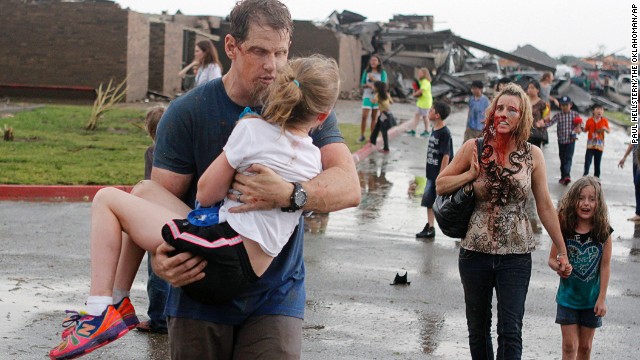
"Last Monday afternoon, while preparing a shipment of tetanus vaccine for a town recently struck by a tornado, I received the first hair-raising alert about a massive tornado that had just leveled a suburb of Oklahoma City.

Having responded to many emergencies for AmeriCares, a global health and emergency response group providing humanitarian aid to 164 countries since 1982, I knew right away what this would mean for potentially thousands of families and individuals in the tornado’s path. There was no question that our disaster team would respond—and we knew it was vital to respond quickly. Experience says that when an EF5 tornado hits a metropolitan area, local clinics and shelters need emergency medical and relief supplies. Fast.
There is a terrible, familiar pattern to natural disasters and other emergencies, and the script is eerily similar for a massive tornado, an earthquake or a massive fire. Information is key in the early hours. That’s why we immediately started calling our partners in Oklahoma to learn which clinics and health centers had been damaged and which were still operating and able to help survivors. We began to plan our first deliveries of medicine, water and first aid supplies. We made calls through the night until it was time to leave for our 6:00 a.m. flight from LaGuardia to Tulsa, Oklahoma. I didn’t even try to book a flight into Oklahoma City—residents who are displaced need resources like rental cars, so we don’t want to use those.
After driving from Tulsa for over an hour, traffic on the highway suddenly came to a stop. Destruction lined both sides of the road. I’ve never seen anything like it. When you see devastation, you forget you’ve been up all night; any fatigue just evaporates. The side roads were gridlocked, too: At 2:30 p.m. on Tuesday, residents were not yet allowed into the area and police were stopping every car. The police waved us through as first responders who had come to help.
The first step: calling and meeting with local partners to understand their immediate needs. We learned that in addition to Moore Medical Center (the city’s hospital and clinic), numerous health-care facilities had sustained serious damage. And, of course, as many as 13,000 homes had been damaged or leveled, leaving many residents with nothing.
Next, talking to the Red Cross and local partners. We asked how many people were coming to shelters and what local stocks of vaccines and medicines were available. We emailed our office and ordered shipments of personal care kits, bottled water, and vaccine and diabetes medicine for health providers. Some items would come from our Stamford, Connecticut warehouse, where we have stockpiles of the most essential materials in readiness for any large-scale emergency; others would ship directly from regional warehouses. We moved quickly so that the critical relief supplies would arrive as soon as the next day.
On Wednesday we met with one health partner that needed cardiovascular and respiratory medicines for survivors who had lost theirs in the storm. But what formulation—tabs or liquid? What doses? What does the health partner prefer and what can they accept? While speed is important, precision is key: What we send—whether it’s hygiene kits or diabetes medicine—must be useful.
Three days into our response, we are already beginning to develop a medium- and long-range recovery plan for helping to restore health services in the coming weeks. We’ll meet with staff from the Moore Medical Center to learn what they need to begin serving their community as quickly as possible. They may require ongoing shipments of medicines or help building a temporary health clinic. Three weeks from now, our plan should be fully operational, while we continue to keep our eyes open for gaps in services. From our ongoing work in response to Hurricane Sandy, we know that there will be a need for mental health services in the months to come, so we will identify who in the community is best situated to provide that care.
Even as our focus remains on providing assistance quickly and effectively, you can’t help but be affected by the total destruction everywhere you look. On Tuesday, I was waiting in Moore to be interviewed on camera for a national news program. Standing in the mud, trying not to trip on wires and debris, I began listening to the reporter and realized he was talking to a man whose 9-year-old daughter had died at the Plaza Towers Elementary School. The reporter choked up and I was stunned. I barely recovered before I went live on the air.
For survivors, access to quality medicines and health care can change a life. So we will keep working around the clock to ensure that our disaster relief reaches the people who need it now. And we will be there to help them as they begin to rebuild their lives. This is what keeps us going and motivates us to prepare for the next disaster in the United States—or anywhere else in the world."

Comment!

The new Google Maps!


According to Bernhard Seefeld, product management director at Google Maps, "this is the most significant overhaul of Maps since it launched in 2005." We sat down with both Seefeld as well as Jonah Jones -- lead designer of Google Maps -- following a marathon keynote to kick off Google I/O. Their slice of the event centered around the desktop refresh of Google Maps, but there's actually a lot more to be excited about than what was announced today. Essentially, the preview that I/O attendees were granted access to is the first instance of Maps for desktop using vectors instead of tiles. In lay terms, that's a far sexier rendering engine, and users of the mobile Maps products will already be familiar  with how it feels. Seefeld affirmed that the new desktop Maps is slightly quicker to load, but you'll want a WebGL-supporting browser to take advantage of the bells and whistles. (In our tests, the Maps experience was far superior in Chrome compared to Firefox.)
We toyed around with the new layout for a bit, and overall, it looks and feels better. Refreshing, you could say. The search box is now entirely more useful, popping up intelligent cards beneath places you search for. You'll have glanceable access to operating hours, surrounding traffic and recommended places -- that's not new, it's just surfaced in a more sensible way now. There's also dedicated shortcuts to directions and starring. Visually, it looks a lot nicer, the zooms are a little cleaner, and the search box is a tad more useful. Street View is accessed via the search box now, and there's a toggle on the right side that overlays Google Earth data and (impressively) shows it from varying degrees of tilt. The magic really begins after you sign in with your Google account. If you've starred or rated a restaurant using Google Maps or Google+, for example, it'll automatically populate recommended eateries that your friends have rated highly. If, of course, your friends are using Google+.
The real rub here is that most of the new features in Maps rely on data fed in by Google+. It's actually a fairly depressing trend; Google's core services are becoming less and less spectacular for those who have no interest in joining yet another social network. We asked Seefeld and Jones if Google had plans to integrate recommendation data from Foursquare, Facebook or any other third-party service. "We aren't actively avoiding those," Seefeld said. The reality is that Google+ data was the most easily accessible as the new Maps were being built, so that's why the integration is so tight. Without saying as much, he gave the impression that future iterations will indeed inhale data from even more services -- including rivals -- to make the overall experience more useful.
We also asked whether or not stars would ever become fileable. In other words, stars on Maps today are all the same. You can't file a certain segment of stars into a "North Carolina Museums" folder, or perhaps a "Moorea Vacation Spots" folder. There's no current way to assign stars to certain events or interests. According to Jones, that's something that could change in the future. That's actually one of the complaints that Google has been hearing for some time now from power users, and considering just how well labels work in Gmail, it's obvious that the company could cook up a similar filing system for Maps.
Moreover, Seefeld confirmed that the Maps team is looking into more intelligent responses to inquiries. For instance, searching for "us national parks" in Google Maps leads to a bunch of useless results today. But in an ideal world, you'd see a zoomed-out view of the United States, with each National Park highlighted and clickable. While not in this iteration of Maps, it's something that's very clearly in the pipeline.
In closing, both gentlemen assured me that the new edition of Maps would be coming to Google's respective mobile products in due time. It's using the desktop as a test bed for now, and once it's satisfied there, Android and iOS updates should follow in short order. For now, you can visit this link to request an invite for access to the Maps for desktop preview. Non-I/O attendees should see access granted in waves starting as early as tomorrow.
Comment!